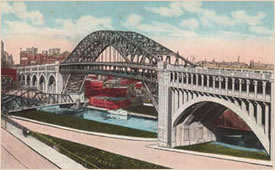
MOVING DAY!!
THE HALE BRIDGE AIRLIFT
By Allan King Sloan
On March 8, 2006, I had the immense pleasure of watching Iowa National Guard Chinook helicopters skillfully drop the three spans of the Hale Bowstring Bridge, built by the King Bridge Company in 1878 across the Wapsipinicon River in Jones County, Iowa, onto to new piers constructed in the river 16 miles upstream of its original site. There it will serve as a new entrance to the Anamosa State Park. It was thrilling to see the products of modern aviation technology (the helicopters) provide the means for an important old technology (wrought iron bowstring bridges) to serve a new role as an icon of an important age in the history of the nation’s industrial and transportation development. The successful move of this historic bridge (which bears the 1867 patent of great, great grandfather Zenas King) was a tribute to the tireless effort of local citizens led by the Jones County Historical Commission, and public officials and departments at the town, county, and state level to create a harmonious program for historic preservation that has been a spectacular success. Below are my pictures of the sequence of events.
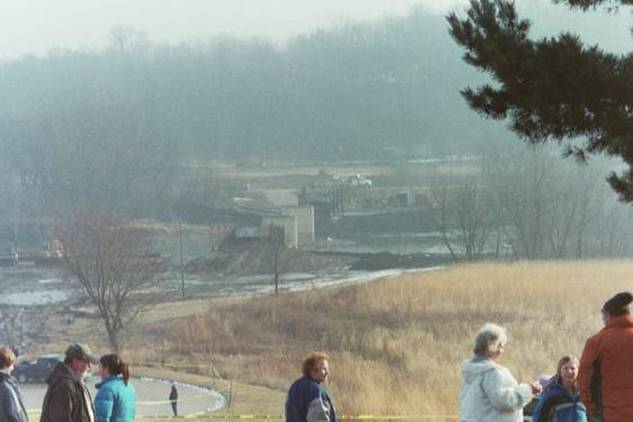
At about 9 AM the gathering crowd awaits the arrival of the first span on the knoll in Anamosa State Park overlooking the river with the newly built piers.
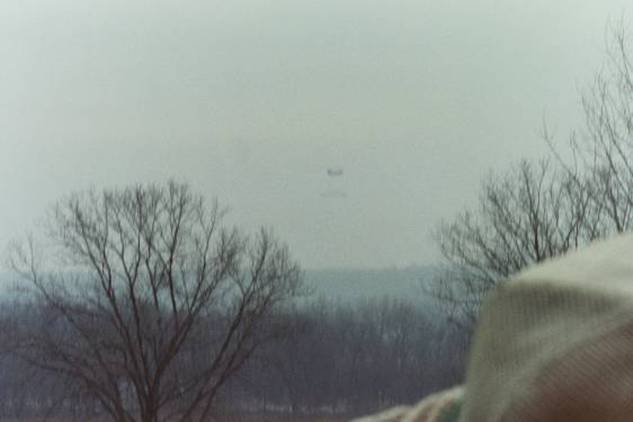
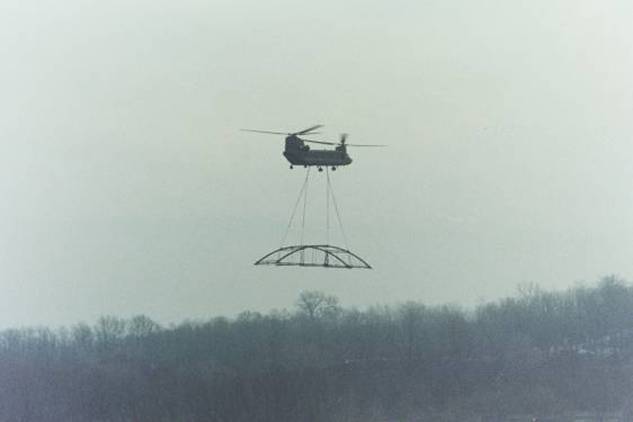
Out of the mist, the first span appears slung below the powerful Chinook at about 9:30
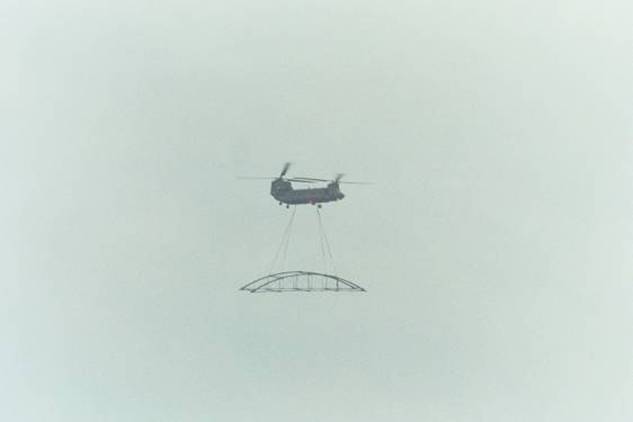
The helicopter approaches the river from the southwest with first of the two shorter spans clearly visible.
With its rotors beating with a dramatic pulsing sound, the Chinook begins its descent towards the river from the west.
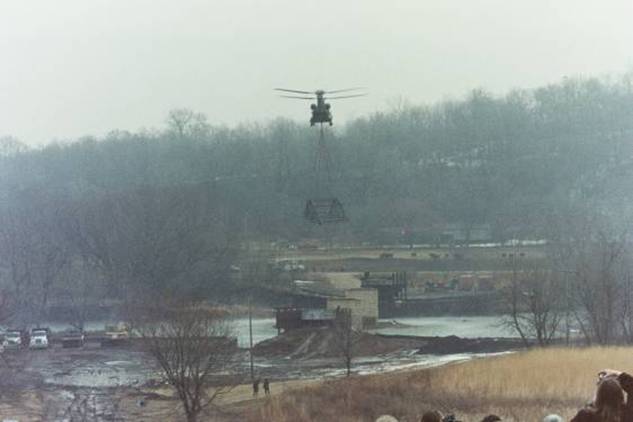
The first span is lowered to an earthen platform in the riverbed beside the two central piers so that the second and third spans can be placed on the north and south abutments without danger of damage caused by a collision.
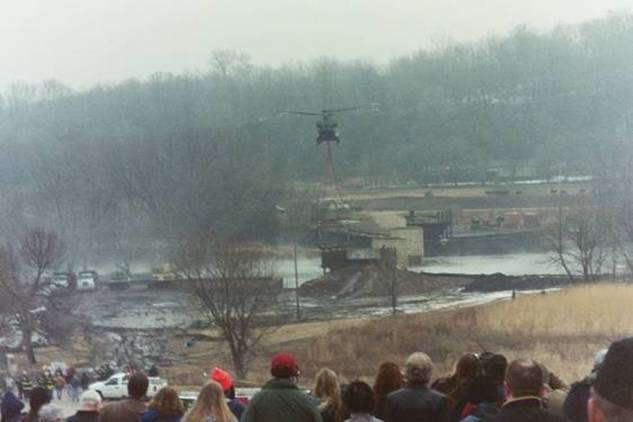
The crowd waits anxiously as the span is delicately maneuvered onto the platform after about four minutes of hovering.
The three spans were removed from the river in 2003to allow the construction of a new bridge. They have been sitting in fields in the village of Hale adjacent to their original location awaiting the decisions about their future. Once the plans were finalized, the three spans were repaired, sand blasted, repainted, and rigged for the airlift. The total cost of the project is estimated at $445,000, with funds coming from federal, state and local government sources in addition to private contributions.
.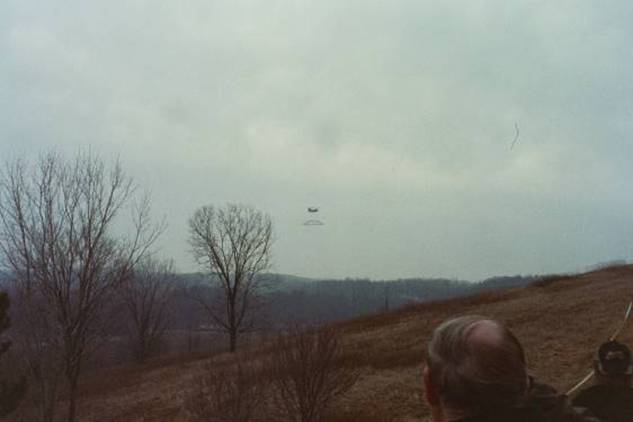
A bit past 10:15 AM the second Chinook is spotted carrying the largest of the three spans. It weighs 19,600 pounds, just 400 pounds below the safe lifting weight capacity of the helicopter.
The bowstring arches in all three spans are made out of wrought iron boiler plate shaped into hollow tubes in accordance with the “Z. King Patent Tubular Arch” design created by Zenas King in the 1860s. The design allowed for the making of a relatively light truss structure that was very strong and easy to assemble. Most of the elements of the trusses were manufactured in the King Bridge Company factory in Cleveland, Ohio and shipped by railroad to a location close to the bridge site where they were assembled by local crews.
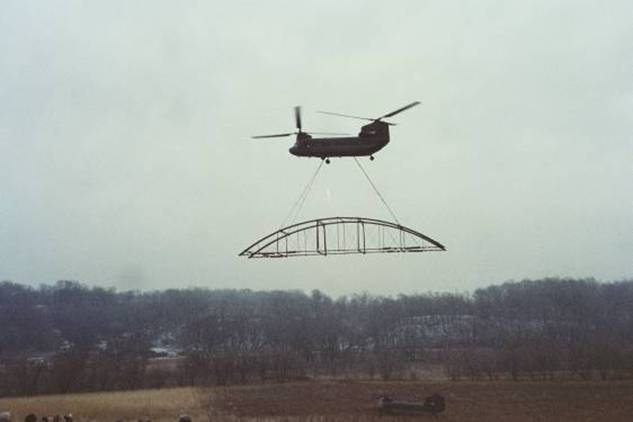
This time the approach to the river is made from the east to facilitate placing the span on the piers on the south side.
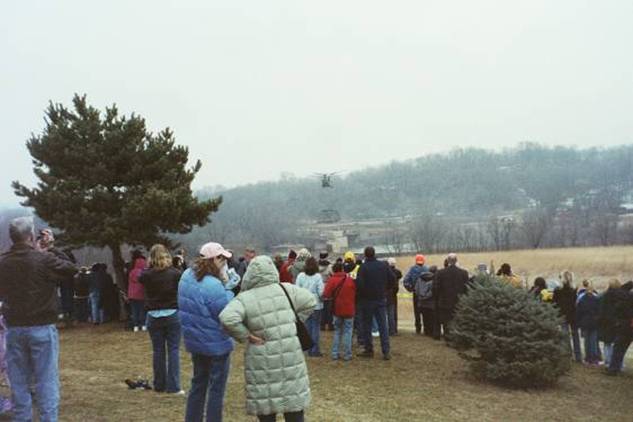
The Chinook hovers over the southern most piers and begins its precision maneuvering as the crowd watches anxiously.
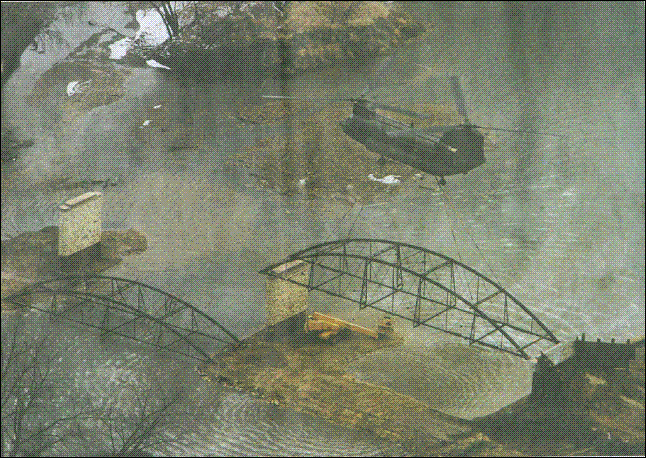
This dramatic shot of the Chinook lowering the largest span onto the piers was taken by David Lienemann of the Cedar Rapids Gazette. The precision required on the part of the helicopter pilot and his crew to position the span in its proper place is truly amazing.
In the 1870’s, the King Bridge Company secured contracts to build a number of these patented bowstrings in Jones County and elsewhere in Iowa. Because of their relatively low cost and ease of construction, this bridge type was very popular, particularly in fast developing counties in areas where getting agricultural products to market was a priority.
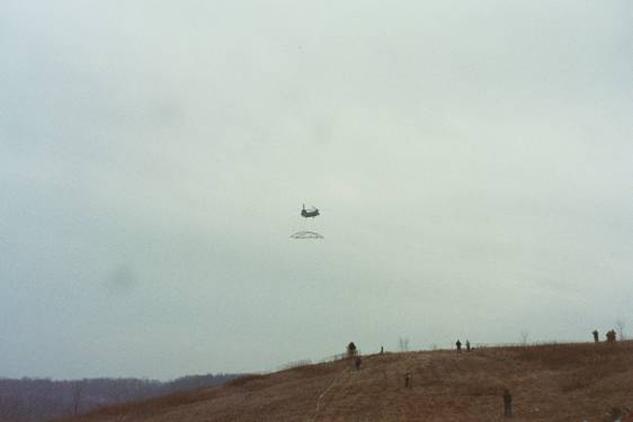
Finally about 45 minutes later the third span arrives at the site.
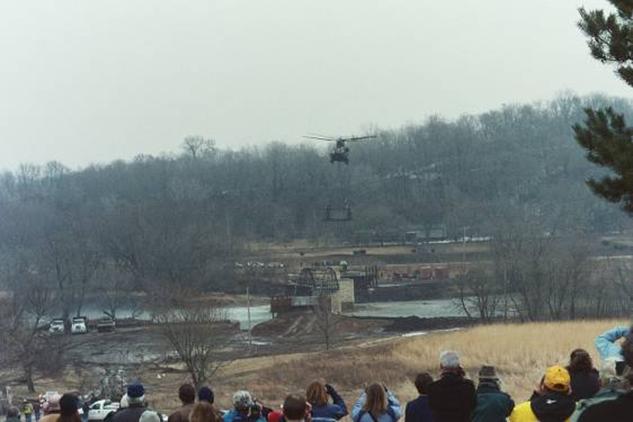
The helicopter hovers over the northern piers to position the span for its final descent.
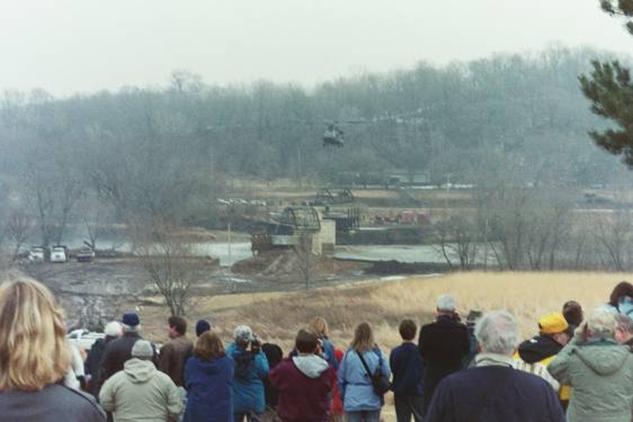
And the last span is put delicately in its final resting place to the relief and joy of the crowd. The National Guard helicopter pilots and crew complete their mission flawlessly.
The historical importance of the Hale Bridge has been documented by the Historical American Engineering Record (HAER- see Historic American Buildings Survey/Historic American Engineering Record home page and click on Hale Bridge for the complete report and photographs taken in 1995). It has also been documented in the Iowa Department of Transportation’s Historic Bridge Inventory. In its original location, the Hale Bridge was also listed on the National Historic Register. While it had to be removed from the register to allow for its relocation, a new listing will be sought for the bridge in its final resting place.
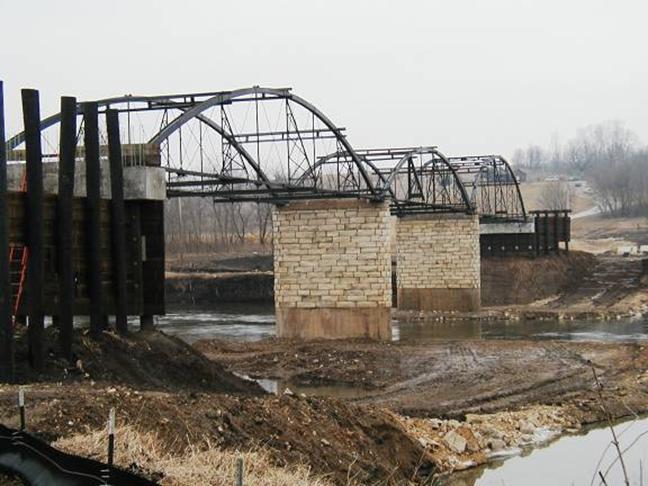
Photo by Paul Rohrbacher
With the three spans on site, the final task was to lift the middle span by crane from the platform in the river onto the middle two piers. The Hale Bridge is now secure in its new location after years of careful planning and coordination among dozens of local and state agencies.
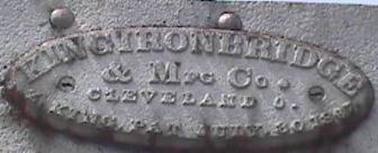
When photographed for the HAER survey, the Hale Bridge had two builder’s plates attached; the first inscribed with “1878 – Built by The King Iron Bridge Company, Cleveland, Ohio” located on the cross beam of the 100 foot span, and a second attached to a section of one of the bow arches and pictured above with the notation” Z. King pat – July 30, 1867”. Both had been taken from the bridge sometime after 1995. While the first of these plates has been found, the second with Zenas King’s patent reference is missing!
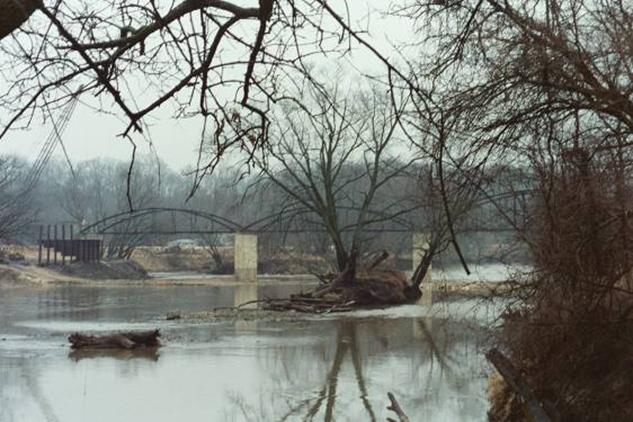
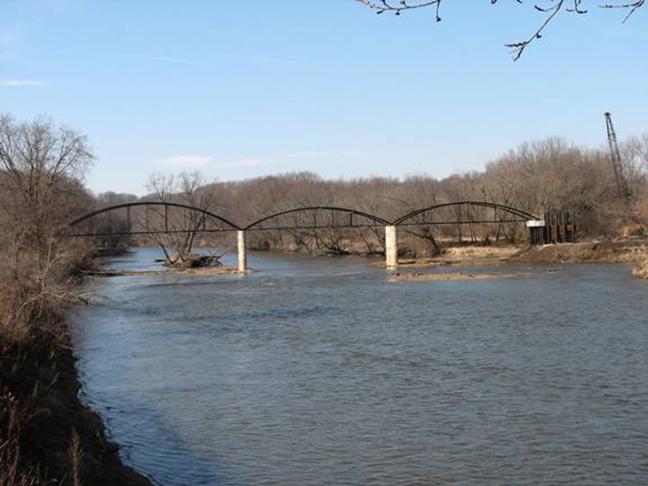
With the three spans in place on their new supports, the project is ready for the next step; the placement of stringers to support a new deck, the building of the approaches to the bridge, and the landscaping of the areas on both sides of the river that will serve the bridge’s new function as part of a three mile hiking and biking trail system.
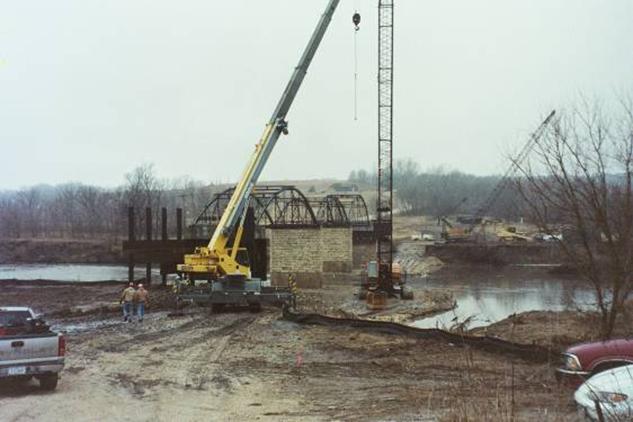
Photo by the Jones County Historical Preservation Commission
The Hale Bridge is finally safe in its new home and ready to serve the public for the next century.
For information, contact Rose Rohr (rcrohr@ia.net) and check out the pictures at the Jones County Historical Preservation Commission website at www.jchpc.gengap.com.